
This is a little page for talking about philosophy ! it will be extremely rambly and unfocused but if the rest of the site hasnt hinted to that already then i'd be surprised.
This is a little page for talking about philosophy ! it will be extremely rambly and unfocused but if the rest of the site hasnt hinted to that already then i'd be surprised.

27/3/26
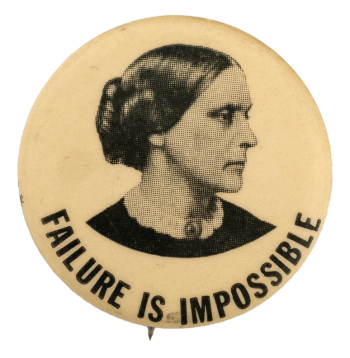
I come with a surpringly long (yet not very well thought out) ramble about sexism, the manosphere, and somewhat obscure 15th century philsosophy (I promise it will end up related).
To set the stage the main focus is on Christine de Pizan, a 14th-15th century philosopher and theologian who wrote mainly on the harms of misogynistic ideals in writting and the church. De Pizan was a pretty prolific writer and one of the few examples of the church, espeically at the time, recognising that they were wrong and facilitating harm. The reason I am talking about de Pizan in this contet however is not to do with the church but because of the terrrifying and now quite prevalent ideologies which make up the 'manosphere' that is to say; percieved hyper self-reliance, rejection of gender equality in the home and workplace, a rebeling against what is viewed as 'wokeness', and of course an obsession with ones own toughness, masuclinity, and 'honour'. This matters mainly as these manosphere ideals are nothing new - a fact they are often all too proud to point out, aruging that it is some sort of traditional ideology and they simply want ot put things back to how they were (despite the bulk of their ideals being still modern societal constructions rather than some inherent natural state of being).
What I am particularly talking about in this post however is not the absurd rejection of society only to claim that American 50's nuclear family ideals are somehow how humans have always functioned, but rather how their arguments against women being equal are so much older, and in fact were disucssed and refuted by Christine de Pizan all the way back in 1405. There are a few key aspects identified as in all of the misogynistic arguments I have seen used, particularly that they have the intention of slandering women (whether it is consciously or not). De Pizan noted that this slander exists typically from five different justifications: 1. White Lie, 2. Sinful Desires, 3. Deficiencies in their own bodies, 4. Jealousy, 5. A natural tendency to criticise. To give a little more insight into each of these categories, 1. refered to men saying they slandered women in order to make others avoid women, typically in order to protect their virginity, godliness, etc. 2. refers typically to those who slander women in order to protect themselves from their own desires (a kind of inverse of the white lie). 3. refers to men being insecure in of themselves, whether it be due to percieved unattractivness or impotence, but it results in a lashing out at women for not desiring them (this is the typical incel motivation, and is often more dependant on their percieved deficiencies rather than others identifying problems. 4. is somewhat vague and seems captured by the previous categories but one could also take a more modern reading and recognise potentially a kind of internalised misogyny in transwomen who reject it in themselves? Or potentially even in post transition transmen developing a kind of misogynistic thought process to distance themsevles from painful memories or to feel more like a 'guys guy', but this is all just personal recognition. 5. is perhaps the most clear and so does not require a further definition beyond perhaps reminding any potential reader resistent to the idea of being naturally predisposed to certain actions this is the work from over 600 years ago and so general perceptions were different.
De Pizan focused most on the first, the 'white lies' category, as she believed that the others seem like much more clear cut cases. She first argues that this form of slander, while potentially having noble intentions (protecting the teachings of the church) is still an unjust act as it requires harming another and relies upon gross ignorance. Secondly de Pizan argues that these 'white lies' create a structural problem for society. This is because men had the primary authority on moral judgements (and it is arguable that they still do), and because of this authority it is easy to make slanderous claims and go unpunished. But in this act of claim making their speech acts also appropriate the rights of those 'lesser' in society (in this case women) to use for their own advantage. This seems to go against the very core principle of social justice which relies upon a fair and equal distribution of social goods (ie rights).
So, why am I rambling about a 600 year old book writen by a woman who just wanted to be treated as somewhat equal ? Because I believe that de Pizan's arguments forms the foundation for much of our modern ideals of equality, and 'roid riddled tate-types who have too much time and a surpring amount of AV recording equipment insist on making about 9000 podcasts a day to tell you that in fact women do not deserve the substandard rights that have already been fought and gained in countless global societies (with a particular focus on the 'western world' whatever that truly means). They argue that women seem to live easier lives than they can, due to some inherent value in beauty, without ever recognising that the structres they uphold which put feminine beauty on a pedastal does that in the same way one may put up a trophey, that is something to be won and shown off by a man, never a good for the woman in of herself. I believe that countless of these so called influencers truly believe they are protecting boys or young men from the 'damage' women will do to them, which sounds awfully familiar to the white lies de Pizan recognised so long ago.
If this sounded interesting I implore you to do your own readings, the text I am primarily referencing is Christine de Pizan's 'The Book of the City of Ladies'.
P.S. I apologise of the complete and utter lack of proper structuring here, I recognise it is very stream of consciousness but I found it deeply interesting and have been taking any excuse to try to continue to work on the site (even if I can recognise it is mainly procrastination from studying).
20/10/25
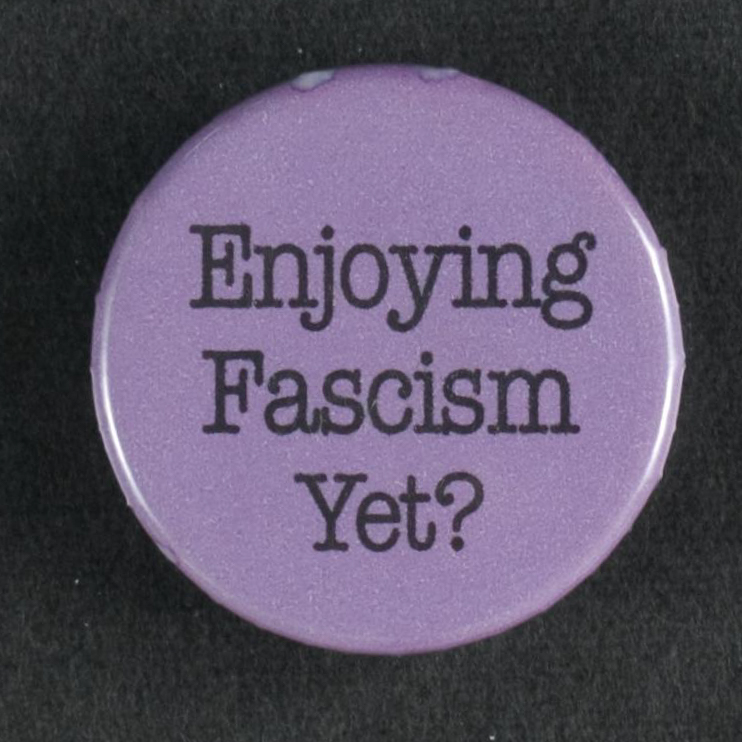
I have spent a good amount of my time reading about fascism and its rise in Italy, and i think there are a great number of paralells between Mussolini and a certain current world leader often in the news, so i thought i would take some time highlight some of those paralells here (and hope i dont end up grabbed in the night for thought crimes).
1. Obsession with Autarky - Both are known by their obsessions with complete national self-reliance and highlight that constantly by cutting themselves off from the international community.
2. Religion as politics - Both heavily relied upon the Christian block when coming into power, and continually try to intertwine their political policies and religion whenever they can.
3. Internal Exile - Mussolini gave the police special powers to arrest and 'internally deport' citizens to isolated towns and facilities if they were deemed troublemakers for the regime, while the current leader is not known for the 'internal' part of this I think paralells are very clearly drawn.
4. Focus on Erasing Queer People - There was a large queer community in europe pre-ww2 but (as many know) the axis powers destroyed a lot of the resources and community spaces - this is also quite clearly seen with the current leader with their repeated outbursts against specifically the trans community, but also just the queer community at large.
I have run out of time to update this little page but will be back to add more when I am able to ! (or potentially my wife will have to do it on my behalf post-humously)

06/18/22
Lorem ipsum dolor sit amet, consectetur adipiscing elit. Integer sit amet ex quis nisi auctor mollis. Phasellus nec nunc sit amet purus mattis sodales. Morbi lectus nunc, tincidunt dapibus sem vitae, porttitor ornare leo. Fusce elit augue, rhoncus sed finibus non, faucibus id tellus. Pellentesque nec justo ex. Praesent nec velit at mauris ultrices bibendum. Fusce fringilla, magna eu bibendum ornare, lacus sapien ornare est, egestas semper urna orci lobortis massa. Maecenas sed ultrices ex, sed cursus orci. Donec orci massa, rhoncus vitae elit sed, tempor gravida nunc. Aenean id iaculis risus, ut interdum mauris. Nunc ac rutrum justo. Praesent eleifend, nunc ac cursus vestibulum, odio nulla fringilla nisl, eu laoreet quam orci eget libero. Maecenas sollicitudin felis nunc, dignissim iaculis est iaculis ut.
06/18/22
Lorem ipsum dolor sit amet, consectetur adipiscing elit. Integer sit amet ex quis nisi auctor mollis. Phasellus nec nunc sit amet purus mattis sodales. Morbi lectus nunc, tincidunt dapibus sem vitae, porttitor ornare leo. Fusce elit augue, rhoncus sed finibus non, faucibus id tellus. Pellentesque nec justo ex. Praesent nec velit at mauris ultrices bibendum. Fusce fringilla, magna eu bibendum ornare, lacus sapien ornare est, egestas semper urna orci lobortis massa. Maecenas sed ultrices ex, sed cursus orci. Donec orci massa, rhoncus vitae elit sed, tempor gravida nunc. Aenean id iaculis risus, ut interdum mauris. Nunc ac rutrum justo. Praesent eleifend, nunc ac cursus vestibulum, odio nulla fringilla nisl, eu laoreet quam orci eget libero. Maecenas sollicitudin felis nunc, dignissim iaculis est iaculis ut.